
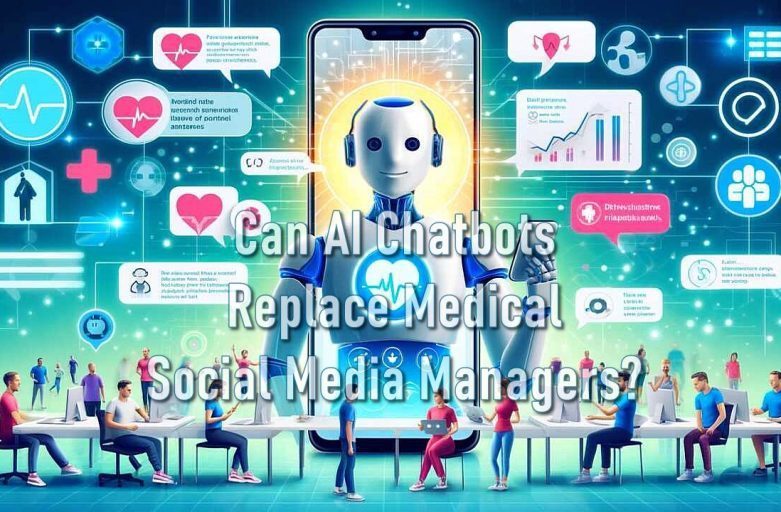

Hey, let’s talk about something that’s shaking up the healthcare marketing world—AI chatbots. These digital assistants are everywhere. They answer questions, schedule appointments, and even handle patient concerns. But here’s the big question: Can they actually replace a human medical social media manager?
Before we jump in, there’s something you should know. BastionGPT is leading the charge in AI-powered healthcare communication. Unlike generic AI, it’s built for privacy and compliance—a huge deal in the medical space. But does that mean AI can handle the complex human side of social media management? Let’s find out.
AI in Medical Social Media: What Can It Do?
First things first. AI chatbots are incredibly powerful when it comes to handling tasks quickly and efficiently. They can respond to patient inquiries almost instantly, ensuring that no question goes unanswered. They also have the ability to generate social media posts in a matter of seconds, reducing the time it takes to maintain an active online presence. And let’s not forget their skill in analyzing engagement metrics, providing valuable insights into what works and what doesn’t.
Sounds great, right? It definitely is, especially when it comes to handling repetitive tasks. By automating these processes, AI allows human social media managers to focus on the bigger picture, like building brand identity and engaging in meaningful conversations with the audience. But here’s where things get tricky—human connection.
Think about it. A patient dealing with a scary diagnosis doesn’t want a robotic answer. They need empathy. Reassurance. A conversation. And that’s where human social media managers still have the edge. While AI can be programmed to sound friendly, it doesn’t truly understand human emotions. A chatbot might respond to a heartfelt comment with a generic message, but a human social media manager will craft a response that feels personal, warm, and real.
What AI Still Can’t Do
AI can mimic conversation, but it doesn’t truly understand emotions. When a patient shares a personal story about struggling with a chronic illness, AI might generate a polite but detached response. It might say something like, “We’re sorry to hear that. Please contact support.” While this is technically correct, it lacks warmth. A human social media manager, on the other hand, would take the time to craft a response that feels personal, acknowledges the patient’s experience, and offers genuine support.
And let’s not forget creativity. Sure, AI can generate captions based on patterns and data, but will it come up with a viral campaign that sparks engagement? Will it start a meaningful discussion that resonates with followers? Will it know how to jump on a trending topic in a way that feels authentic? Not quite. Human social media managers bring an understanding of cultural nuances, humor, and real-time engagement that AI simply can’t match.
Compliance and Accuracy: AI’s Strengths… and Weakness
Medical marketing isn’t just about engagement. It’s also about accuracy. A single mistake—misstating a fact, misinterpreting medical advice, or sharing misleading information—can be a legal nightmare. That’s why accuracy is critical in healthcare social media. AI is great at pulling information quickly, but can it always be trusted to get the facts right? Not necessarily. Even the most advanced AI models can misinterpret context or pull from unreliable sources.
A trained social media manager, however, understands nuance. They know what’s safe to post, what requires legal review, and what could lead to trouble if shared incorrectly. This is why AI still needs human oversight. Even the best models, like BastionGPT, work best when they assist humans rather than replace them entirely. With AI handling routine inquiries and automation, social media managers can focus on ensuring content remains accurate, engaging, and compliant with industry regulations.
The Perfect Balance: AI + Human Expertise
So, here’s the verdict: AI chatbots are an incredibly useful tool, but they aren’t a full replacement for human expertise. The best approach? A hybrid model that leverages both AI efficiency and human creativity.
By allowing AI to handle repetitive tasks, automate responses, schedule posts, and analyze data, social media managers can free up time for more important aspects of engagement. Meanwhile, humans can focus on strategic planning, creative storytelling, and building meaningful relationships with followers. This combination allows healthcare organizations to maintain a strong social media presence without losing the personal touch that patients value.
Final Thoughts
AI chatbots are changing the way healthcare brands interact with their audience, and there’s no denying their impact. They provide speed, efficiency, and automation that make managing social media easier. But can they completely replace a human medical social media manager? Not yet. Maybe never.
The real power lies in the balance—combining AI’s ability to process information quickly with a human’s ability to connect on a deeper level. That’s how healthcare brands can truly engage with their audience while maintaining trust and authenticity.
So, what do you think? Are AI chatbots ready to take over, or do human social media managers still have the upper hand? Let’s discuss!